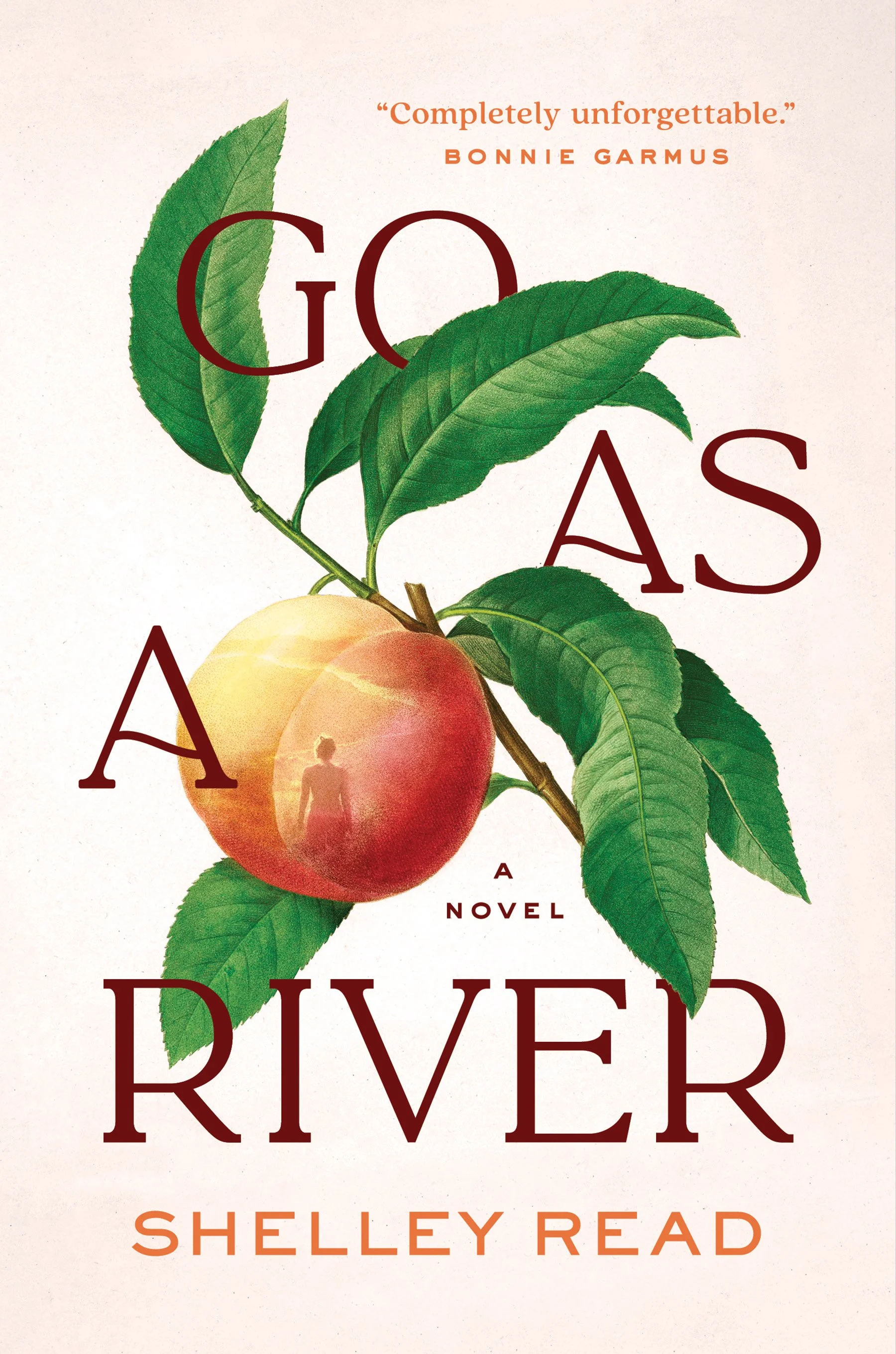
Go as a River
by Shelley Read
☕︎☕︎☕︎☕︎
"The river does not ask permission. It simply goes."
Set in a small Colorado peach-farming town in the late 1940s, Go as a River follows Victoria Nash through a series of losses so relentless and so particular that the novel reads at times like a sustained act of cruelty toward a character you love. It is gut-wrenching in the most literal sense. You feel it somewhere below the ribs.
Shelley Read writes landscape the way it should be written, not as decoration but as a living force, as present and consequential as any character. The Colorado River, the orchards, the mountains: they shape Victoria's life as surely as the people in it. That rootedness in place is what elevates this above a straightforward tragedy. The land isn't backdrop. It is witness, and eventually, it is solace.
There is something quietly radical about the way Read ties Victoria's grief to the rhythms of the natural world. Loss here doesn't resolve, it moves, the way rivers move, carving new channels rather than disappearing. The wilderness doesn't offer escape so much as a kind of honest accounting. You give yourself to it, and it shows you what remains. That reciprocity, the idea that the land will return to you what you give it, runs through every chapter like an undercurrent.
And then there is the question of motherhood, which the novel handles with more honesty than most. To mother in this book is not to protect from loss but to metabolize it, to carry it in your body and pass something else, something harder and more durable, forward. Victoria's love for her child is inseparable from her love of place, both rooted in the same instinct: to tend what you've been given, even when the tending costs you everything.
Read this one slowly. It deserves that.
Four cups: beautiful, brutal, and genuinely moving. Not a book you read for comfort, but one you read to feel something real.