Educated
By Tara Westover
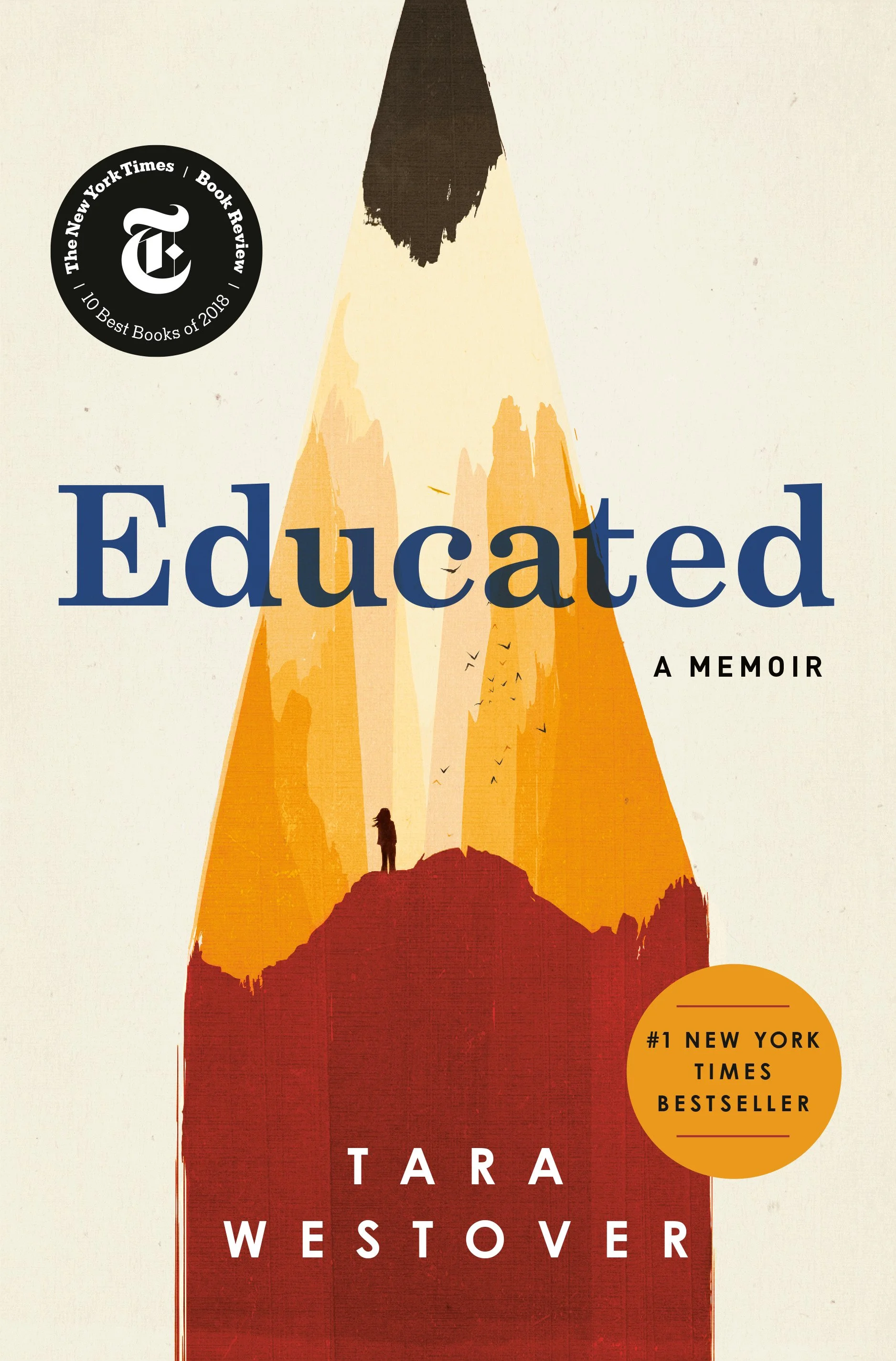
☕︎☕︎☕︎☕︎
I work in higher education, at a community college, which means I read this book twice.
Westover grew up in Clifton, Idaho, at the base of Buck's Peak, in a survivalist family that distrusted the government, the medical system, and public school in roughly equal measure. She had no birth certificate until she was nine. After a traumatic childhood, she somehow taught herself enough, and had enough personal grit, to pursue higher education to it’s highest levels.
What resonated with me was how hierarchical the administrative side of college is. She didn't know what a syllabus was for. She didn't know you were supposed to read the textbook rather than only what was assigned aloud. She didn't know that office hours meant you were allowed to walk in and say you were lost. She was brilliant, she got in, and she still nearly drowned, because getting in and knowing how the place works are two entirely different things and we fund exactly one of them.
That's the piece that reshaped how I think about access out here, and I have a personal stake in it. My husband's family owns land in Montpelier, an hour east of where Westover grew up. Bear Lake County, ranch and grain country, about 2,600 people, no campus of any kind for a long stretch of highway in any direction. I've spent enough time out there to know that when we talk about reaching rural students in Idaho and Utah, we mostly talk about seats, tuition, and failed legislation to expand broadband.
But the widest gap isn't any of those. It's that a kid can grow up in a county like that without ever meeting someone who went to college, without a single adult at a dinner table who can explain what a credit hour is or why the FAFSA deadline is not a suggestion. The distance on the map is the smallest of the distances. I've watched capable students walk away in the first six weeks over something one informed adult could have solved in ten minutes.
Here's where I part ways with how this book gets used. Educated is constantly held up as a bootstraps story, look what she pulled off, when the honest reading is how narrowly it went the other way. She needed a brother who'd left first and told her it was possible. She needed a bishop who intervened. She needed a scholarship, and then a fellowship, and then a professor who noticed her instead of grading her down for gaps that weren't her fault. Take any one of those out and there's no book. Westover herself is clear about this. Readers keep deciding otherwise, because the miracle version is more fun than the version where a system has to actually show up.
Community colleges are the unglamorous version of that miracle. Open door, no ACT gate, someone at the front desk whose whole job is explaining the thing nobody explained to you.
The part that's stayed with me longest is the cost. She got the education and lost most of her family for it, and the book refuses to call that a fair trade or a happy ending. Nobody puts that in the brochure. But I've sat across from students choosing between a degree and the people who raised them, and I recognized every bit of it.
four cups. Everyone reads this as a book about one remarkable girl, and it is. But it’s also a book about how many adults have to do their jobs correctly for one remarkable girl to make it.